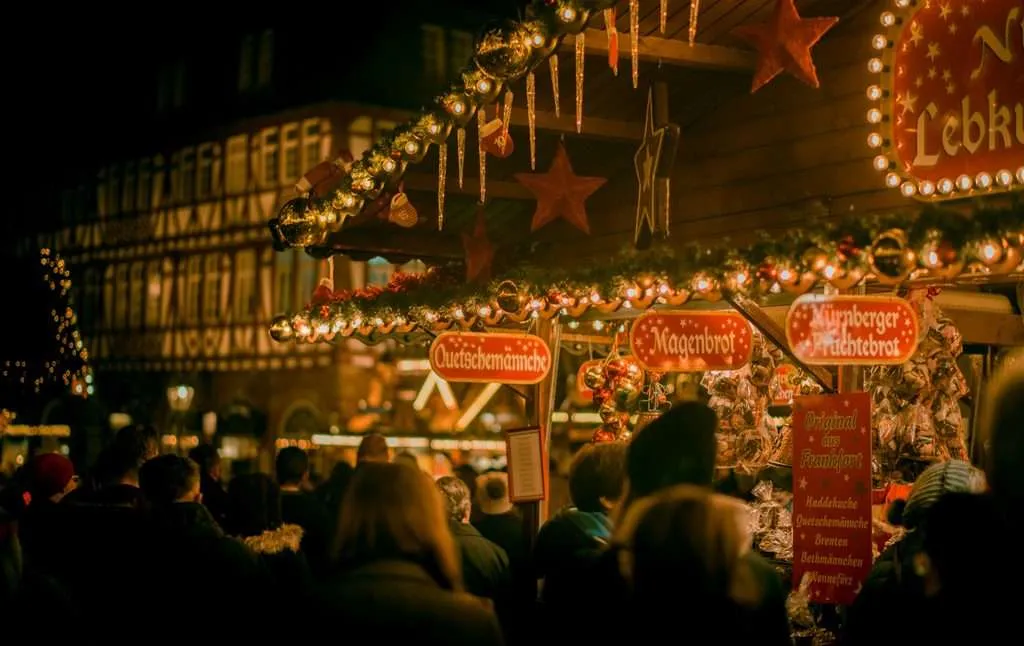
While Europe is known the world over for bright, festive holiday traditions, no country celebrates Christmas quite like the Germans do. Customs like decorated Christmas trees and Christmas markets began in the German regions of central Europe as early as the 16th century. Since that time, the nostalgic and well-loved holiday traditions have made their way across Europe and over the Atlantic, becoming inextricably linked to holiday landscapes around the world.
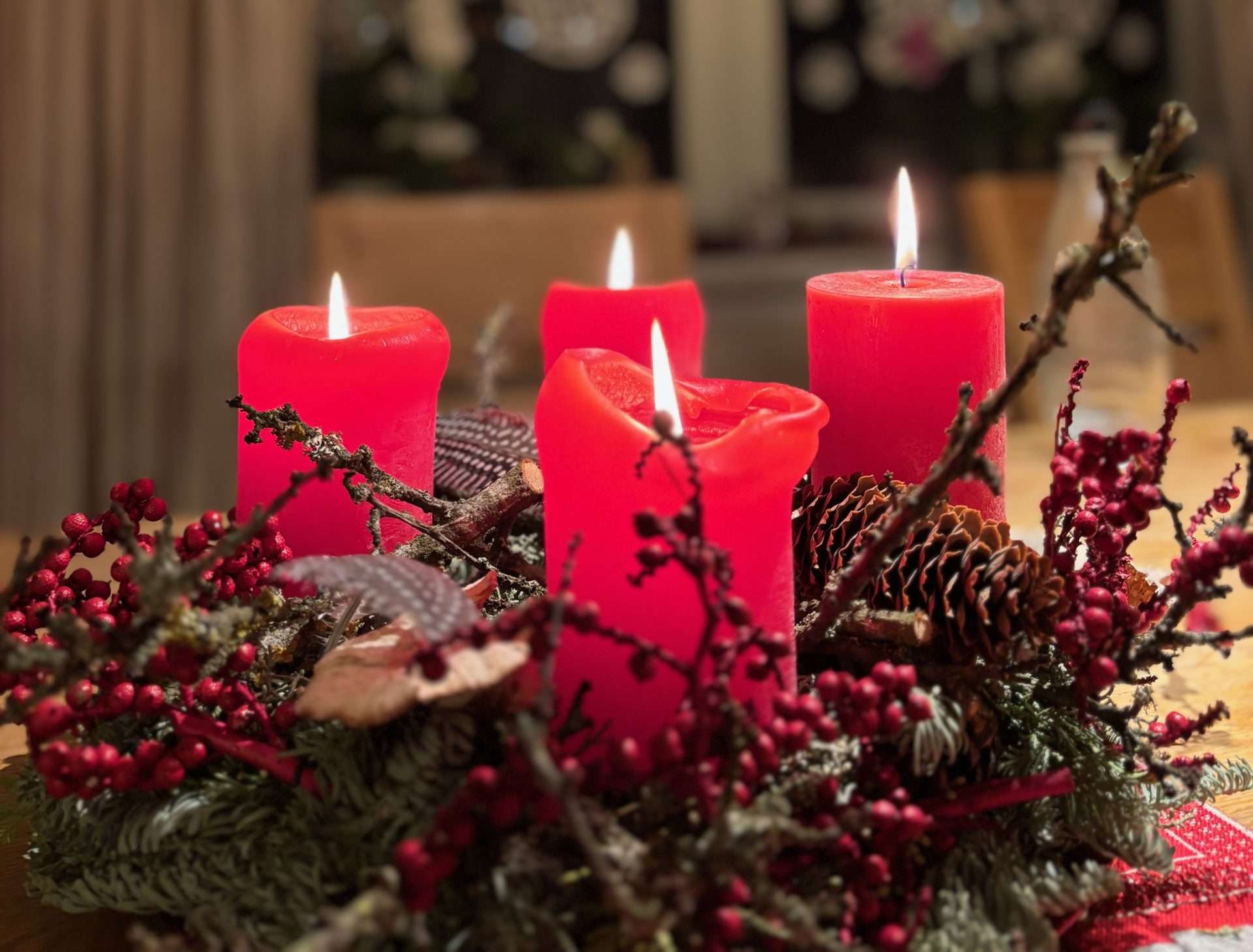
Advent wreaths, like the Advent calendar, also originated in Germany. In a variety of shapes, colors and sizes, Advent wreaths are not hanging wreaths, like their cousin, the Christmas wreath. They are instead skillfully adorned, set on tables and lit with candles. Like the Advent calendar, their history is rooted in the countdown to Christmas.
Made with a mix of fresh and dried materials, Advent wreaths are created in styles that vary from simple to luxuriously ornate. They’re found on nearly every family’s table in Germany—and in the Alsace and Lorraine regions of France—during December. Because everyone celebrates a season of light, these handmade decorations have universal appeal. They continue to be an influential part of the European holiday season and are especially lucrative for the local florist trade.
A Christmas Season Staple
The Advent wreath is the most popular item sold by German florists in late November. “Preparations begin weeks ahead of time. We hand-make about 80 to100 wreaths in various forms,” says Paula Schleicher of Blumen Schleicher, a small neighborhood florist in Heroldsbach, Germany.
Many florists hold an Advent exhibition in mid-to-late November, where their seasonal collection is revealed for the first time. This annual event usually occurs after hours at the florist’s shop as a kick-off to the holidays. With the cozy charm of a Christmas market, customers can enjoy mulled wine, snacks, candles and twinkling lights while taking in the festive display. Wreaths can be purchased onsite or ordered to specifications. By November 30, wreaths adorn the tables and windowsills of German (and French) homes, awaiting the lighting of the first candle on the initial Sunday of Advent.
Core Earnings
According to Thomas Groskopf, of Groskopf’s Nursery & Garten Center in Hemhofen, Germany, a large chunk of yearly income is dependent on the sale of Advent wreaths and other holiday related items. In addition to decorated wreaths, Groskopf offers a large array of candles and other materials, so that customers can buy the supplies needed to make their own wreaths.
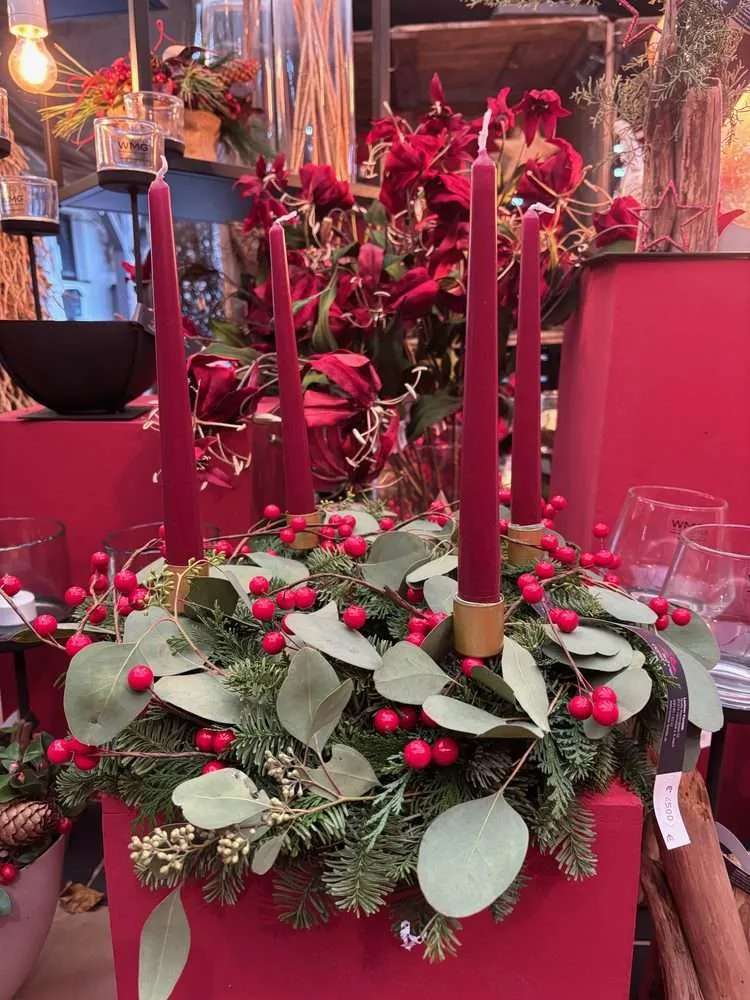
Advent wreaths are so popular in Germany that they can be bought cheaply at discount stores and regular supermarkets. However, Advent wreaths purchased in florist’s shops are handmade and significantly more intricate than something mass produced. Schleicher notes: “Our wreaths are priced from about 40 Euros up into the hundreds, depending on size and complexity.” Candle quality and size are a factor, as well as the base materials and adornments. Florists face intense competition from discounters, yet all agree with Schleicher, who says, “Sales of Advent wreaths, along with our other holiday merchandise, make up one-third of our total annual revenue.”
In-Home Display
The wreaths are most often placed on dining tables, where the candles can be lit each evening. However, because they range from simple to highly elaborate, they can be displayed in any room where family and friends gather.
Sometimes the Advent “wreath” isn’t a wreath at all. Many styles feature a rectangular frame, decorated with greenery and various festive bobbles with candles set four in a row, reminiscent of the Yule log.
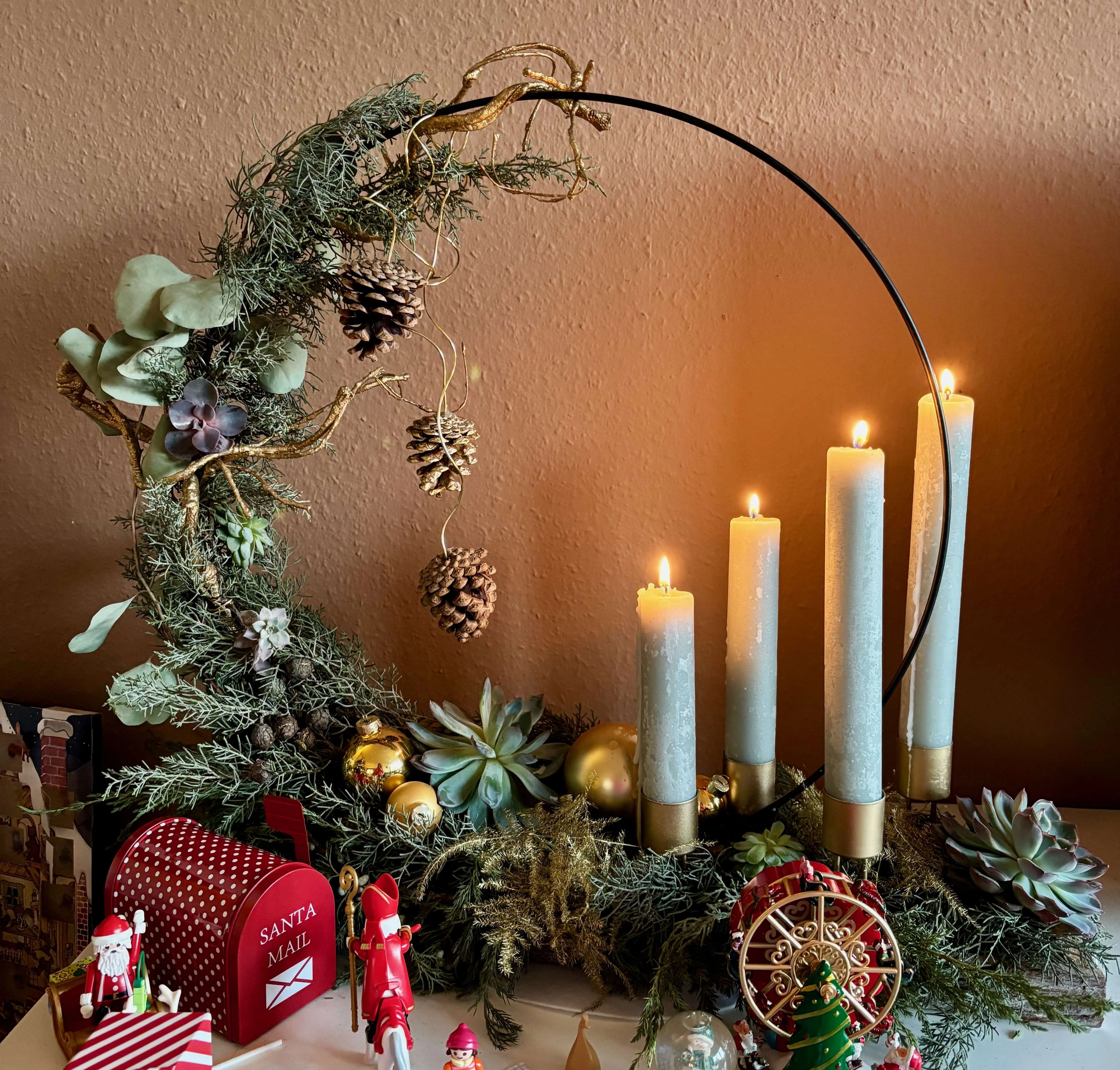
Other wreaths are built upright into a stand, with candles strategically placed within the ring or next to it. Most wreaths feature wax candles with a real flame, and florists take care to construct them so that none of the greenery will catch fire. Recently LED candles have become popular as well.
Bringing European Flair to the American Home
In the United States, Advent wreaths are most closely associated with churches. In Germany and many parts of Europe, however, they appear in nearly every home, having evolved into inclusive cultural traditions that have been adapted and reinterpreted to reflect changing communities.
The Advent wreath offers a beautiful way to celebrate winter by bringing the outdoors in and creatively combining natural materials into a sparkling, lasting arrangement. For American florists, this cherished European custom also presents a timely opportunity to expand their holiday offerings and introduce customers to a fresh seasonal tradition this year.
Constructing an Advent Wreath
The only rule for a German Advent wreath is that it has four candles. Outside of this, the sky’s the limit. Here florists get to show their individuality, creativity and artisanship.
Mechanics
Rings of both straw and metal are used. Wood bases and plastic bases containing floral foam—or wreaths of hardened vines—are used as well. Sometimes customers bring a decorative object of silver or cast iron to the shop and ask florists to build an Advent wreath inside it. Bergs Potter, a Danish supplier of high-end pottery, even offers a line of pots as bases for Advent wreaths.
Greenery
Traditional wreaths are made on a straw ring and wrapped by hand with spruce or fir cuttings. More ornate wreaths use a combination of pine, holly, Arizona cypress and juniper to make an impressive, fresh winter combination. Then the wreaths are decorated in colors and styles to suit every taste.
The most important consideration when choosing greenery for the Advent wreath? It will be sitting indoors, in relatively warm temperatures, for at least one month. So, keep in mind that some greens fare better than others. Cedar, for example, has gorgeous branches but doesn’t absorb water once it’s been cut and therefore falls apart indoors. Eucalyptus is nice as an accent, but indoor wreaths made purely of this foliage dry out quickly and do not hold up for the entire Advent season. The same goes for cut holly. Holly works for outdoor wreaths because it stays cold—but indoors, holly drops its leaves in seven to 10 days.
Adornments like pinecones, dried hazelnuts, walnuts, feathers, metallic or sparkly bobbles are added. While there’s almost always a natural element to the wreath, there are also modern wreaths or wreaths made purely of silk or dried materials that can be spruced up and used year after year.
No matter how it’s constructed, the Advent wreath remains the centerpiece of German holiday home decor until the Christmas tree arrives, traditionally very close to Christmas day.
British and French Holiday Floral Traditions
Known in the U.K. as the Christmas rose, Helleborus niger, is one of England’s most treasured holiday flowers for bouquets and gifts. The hellebore is not a member of the rose family at all, but it is one of the only flowers that blooms in England through the winter. It even stands up to snow. The name derives from a legend about a young girl who wept because she had no gift for the Christ child. When her tears fell onto the snow, they miraculously bloomed into white flowers, forever linking them with Christmas.
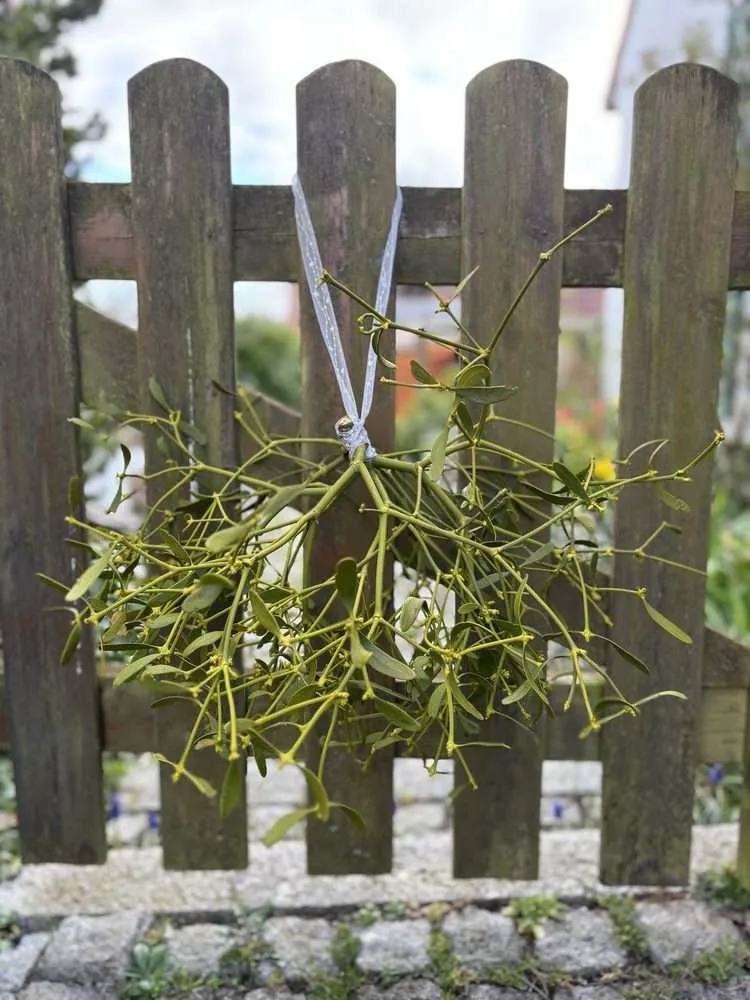
While we are all quite familiar with mistletoe at Christmastime, the French wait until New Year’s Eve to decorate with the cheerful plant and its berries. Mimi Montgomery of Lolo French Antiques writes, “In France it’s less about stolen kisses and more about peace, love and good fortune in the New Year.” Traditionally, French mistletoe sellers—known as vendeurs de gui—gathered mistletoe from the forest and sold it in the streets. (Famously, a Pablo Picasso painting depicts a man and young boy selling mistletoe, symbolizing a life of poverty endured with dignity.) Today, small bouquets of mistletoe can be purchased at local florist shops.